Detected: How artificial intelligence is changing breast cancer detection
Supporters call the technology a game changer; patient advocates say guardrails are needed
GARDEN CITY, Kan. (InvestigateTV) — As a young mom, Ashley Hurd’s breast cancer diagnosis left a trail of uncertainty.
“I didn’t know what my future would look like, and I was worried about my family and my kid’s future,” Hurd said.
As a married mother of four, she expected her first mammogram in November 2024 to be a routine screening at age 40 after her primary doctor said it was time. Instead, doctors diagnosed Hurd with stage one, HER2-positive breast cancer on Jan. 2, 2026 after numerous doctors’ appointments.
What followed for Hurd and her family was months of a routine built around distance. The drive from Hurd’s home in Garden City, Kansas, to the University of Kansas Cancer Center runs more than 380 miles.
“We would leave on Sunday night, drive that six hours, to Kansas City from our hometown, go to chemo the next morning at 6:30 a.m. for my labs, stay there all day, and then make that drive home so I could get back to work the next day and back home to our kids,” she said.
Six rounds of chemotherapy with immunotherapy followed. So did a double mastectomy, then reconstruction. Hurd said the experience reshaped her.
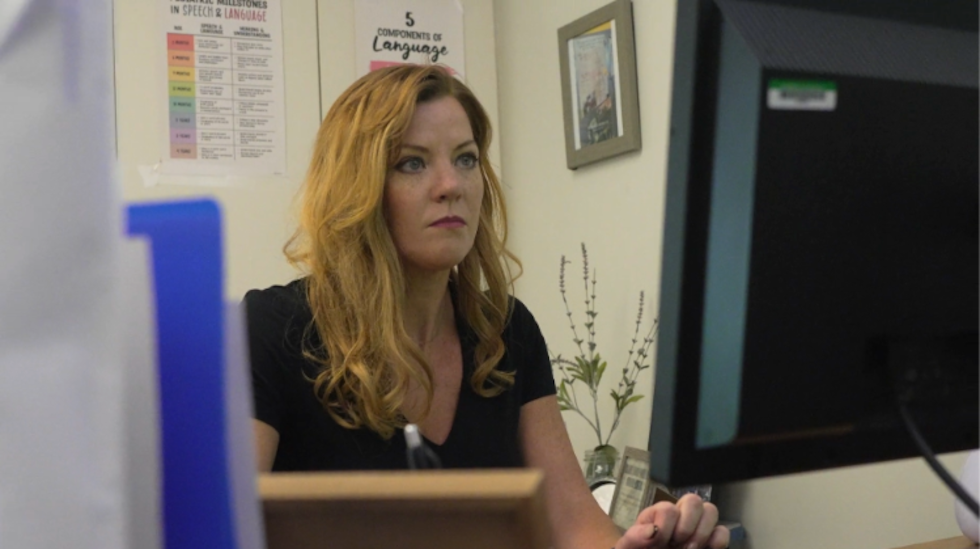
“It changes your whole life,” she said. “I am not the same person from two years ago.”
She believes that early diagnosis is the reason she is still here.
“If I would have waited, I may not be here,” Hurd said.
Now cancer-free, Hurd is watching a new technology move into the healthcare system: artificial intelligence.
She said she sees a role for it to benefit women like her living in rural communities, but not a replacement for the doctors who treated her.
“I like that it can assist doctors, but I still very much want their expertise,” Hurd said. “There’s a reason that they’re the doctors.”
Radiologists are already using the technology
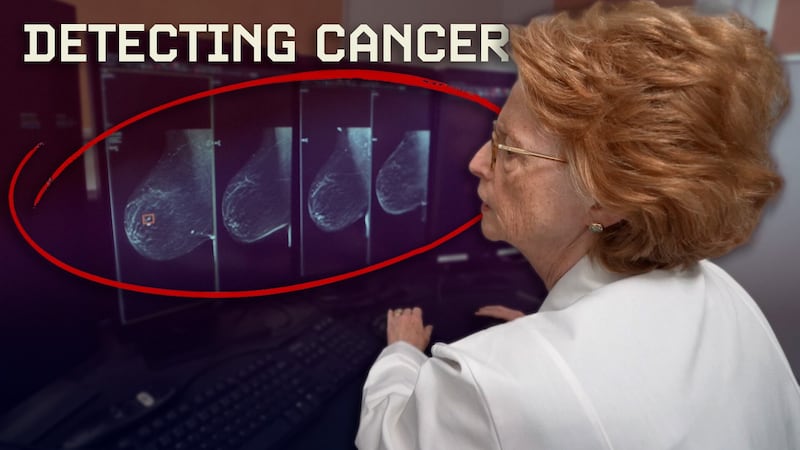
Radiologists across the country are already using AI to help read breast images.
The software reviews a mammogram alongside the radiologist and flags areas that may need a closer look, functioning as a second set of eyes rather than making the diagnosis itself.
“Breast cancer is so common, one in eight women in their lifetime develop breast cancer,” said Dr. Onalisa Winblad, division director of breast imaging at the University of Kansas Health System.

Winblad diagnoses breast cancer every day. She spends her day reading mammograms and breast imaging in a dark room, while also supporting patients through their diagnoses.
For women like Hurd, who travel long distances for care, Winblad believes these AI tools can bridge a gap between specialist shortages and hospital closures.
“No matter where you live or what resources you have, that really should not determine your survival from breast cancer,” Winblad said. “Not only does breast cancer screening prevent death from breast cancer, but it also helps patients undergo less chemotherapy, less extensive surgeries, radiation, or other invasive procedures.”
Winblad said these AI tools produce a scorecard that highlights anything that appears abnormal. She said these tools also can flag lesions and abnormalities, especially in cases of dense breast tissue.
“I do see AI as a really positive tool to help us provide faster care, more cost-effective care, help us schedule, help us educate patients and communicate better with our patients,” Winblad said. “The radiologist still has to be able to understand what those findings mean and the context of the AI tool.”
Skeptical radiologist turned advocate
On the East Coast, another breast radiologist said she started out as doubtful as many patients are.
“I was approached about working on this and helping to develop our AI projects. I was an incredible skeptic. And I said to everyone, ‘Look guys, great, you know, this is a waste of my time,’” said Dr. Janet Storella, medical director of women’s imaging services for Community Radiology Associates at RadNet.
Storella has been working in the field for more than 30 years. She now works out of Maryland at the imaging firm RadNet. She said she found that everybody’s performance improved when they used AI, something she previously didn’t think would be helpful.
“What we found, and what I found personally, was that everybody’s performance improved using these products. When I say performance, I mean my ability to detect cancer improved,” Storella said.
She said she knows her statistics from 20 years of breast cancer detection audits and that, when looking at 1,000 screening mammograms a year, the cancer detection rate went up.
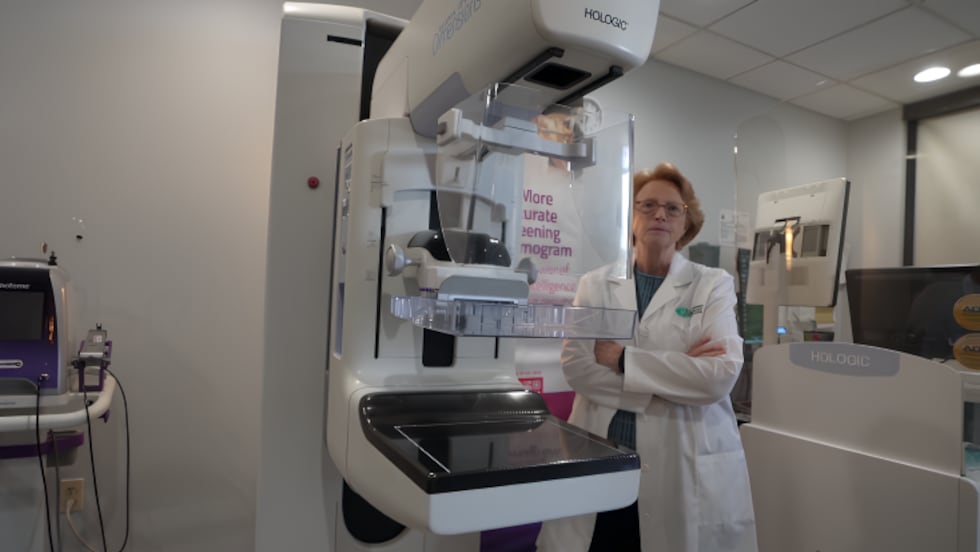
“People with 30 years of experience, people fresh out of training, people who were subspecialty breast imagers like myself, people who are general docs, who are also reading mammography. Everybody’s performance improved, so it’s hard to argue with,” Storella said.
A 2025 study in the Journal of Clinical Medicine found that using AI in mammography screening demonstrated promising results in improving cancer detection rates and reducing false negatives.
That study of more than 31,000 mammograms found that after a clinic added AI, the cancer detection rate rose from about six to about nine cases per 1,000 screenings, with more cancers caught at an early stage.
That type of detection is what Storella has found in her own practice. The AI flags areas on breast images, telling her she should take a closer look.
“It’s really like having my most trusted colleagues sitting next to me and helping me in decision-making,” Storella said.
For her, the artificial intelligence helps her make judgment calls every day in helping her distinguish obvious cases from normal cases to what she calls “the murky middle.”
She said that patients can’t think of this issue as a vacuum; the technology is still evolving.
“Humans make mistakes. AI makes mistakes. The question is, does AI make more mistakes than humans make? Does it make fewer mistakes? I don’t know the answer to that right now,” Storella said.
Advocates call for accountability
Despite the open conversation happening with AI in the field of mammography, questions about guardrails have grown.
Erin Steigleder is the director of programs at the Virginia Breast Cancer Foundation. She has seen how these tools are being implemented across the country in health systems.
She believes that it’s important for patients to understand that AI is a tool and a system that keeps evolving, but it has its shortcomings.
“We are feeding AI images from past mammograms; however, the system is only as good as the images we feed it,” Steigleder said.
Researchers stress there is no proof yet that using AI in mammograms improves survival. Most studies so far measure only how many cancers are found and how early.
For women like Hurd living in rural areas, that early detection could mean catching cancer in its early stages — and fewer six-hour drives to get answers.
“For me, it probably would have been helpful in those early stages when I was so uncertain about what my next steps would be,” Hurd said. “Especially out here in our rural communities. We do have doctor shortages. We don’t have the staffing.”
Hurd is now cancer-free, back to work, using the gym as an escape, with checkups every three months. She believes AI could help with diagnostics but said it has limits, especially that human touch.
“I don’t think AI is able to give me a hug and tell me I’m going to be okay and that they’re going to be there with me,” Hurd said.

Copyright 2026 Gray Media Group, Inc. All Rights Reserved.